
E-waste-Shredding
We understand that the principle of “garbage in, garbage out” is vital to recycling end-of-life electronics. If the quality of the material stream fed into our recycling line is poor, then the quality of our outputs will be poor as well. This means that starting with “homogenous” lots of e-waste is necessary to effectively refine electronics into quality commodities.
Pre-picking: Our end-of-life electronics recycling process begins with a conveyor line in which items that should not be shredded, such as batteries, UPS battery systems, toner cartridges, and fluorescent lights, CRT monitors, are removed by hand before they enter the main shredder.
Water Separation: Water is used to separate plastic from the glass and other mud content.
Shredding: After e-waste has been pre-picked, it flows into the shredding line to be sized down for commodity separation. The main shredder breaks material down small fragments and the final shredder reduces it further into poker chip-sized fragments that are optimal for the separation processes.
It ensure the data security
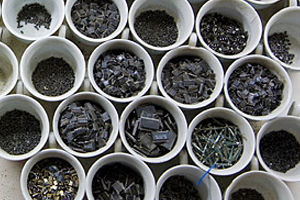
Conserves natural resources. Recycling recovers valuable materials from old electronics that can be used to make new products. Read more
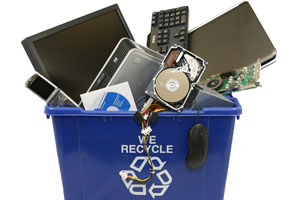
Significant Energy Savings Recycling of electronic waste conserves a tremendous amount of energy. Read more

Reducing the amount of waste produced by a person or a society.

Material is used again for the same function, and new-life reuse where it is used for a different function.

Recycling is a process to change material/waste into new products to prevent waste of potentially useful materials.