
What is E-Waste
E-waste is the informal term for Electronic products that have become unwanted, non-working or obsolete, and have essentially reached the end of their useful life .Due to technological advancement and innovations at such high rate, many electronic devices become trash after few short years of use. E-Waste is any refuse created by discarded electronic devices and components as well as substances involved in their manufacture like computers, televisions, stereos, copiers mp3 players, video Games, cell phones, toys, VCR’s, Microwaves and fax machines. The disposal of electronics is a growing problem because electronic equipment frequently contains hazardous substances.
The EPA (Environmental Protection Agency) estimates as much as 60 million metric tons enter landfills every year. Most electronics that are improperly thrown away contain some form of harmful materials such as beryllium, cadmium, mercury and lead. These materials might be trace elements, but when added up in volume, the threat to the environment is significant. Besides adding harmful elements to the environment, improper disposal of e-waste is a recycling opportunity lost. Almost all-electronic waste contains some form of recyclable material, glass and metals.
E-waste problem is of global concern because of the nature of production and disposal of waste in a globalized world. Although it is difficult to quantify global e-waste amounts, we do know that large amounts are ending up in places where processing occurs at a very rudimentary level. This raises concerns about resource efficiency and also the immediate concerns of the dangers to humans and the environment.
E- waste typically include common electronic items such as :
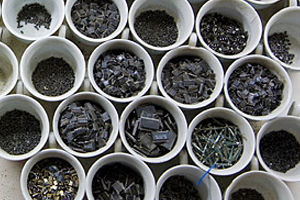
Electronics recycling is equivalent to urban mining at a low cost,... Read more
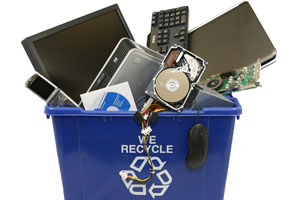
Electronic waste, E-waste, E-scrap or waste electrical and electronic equipment describes discarded electrical or electronic devices. Read more

Reducing the amount of waste produced by a person or a society.

Material is used again for the same function, and new-life reuse where it is used for a different function.

Recycling is a process to change material/waste into new products to prevent waste of potentially useful materials.